
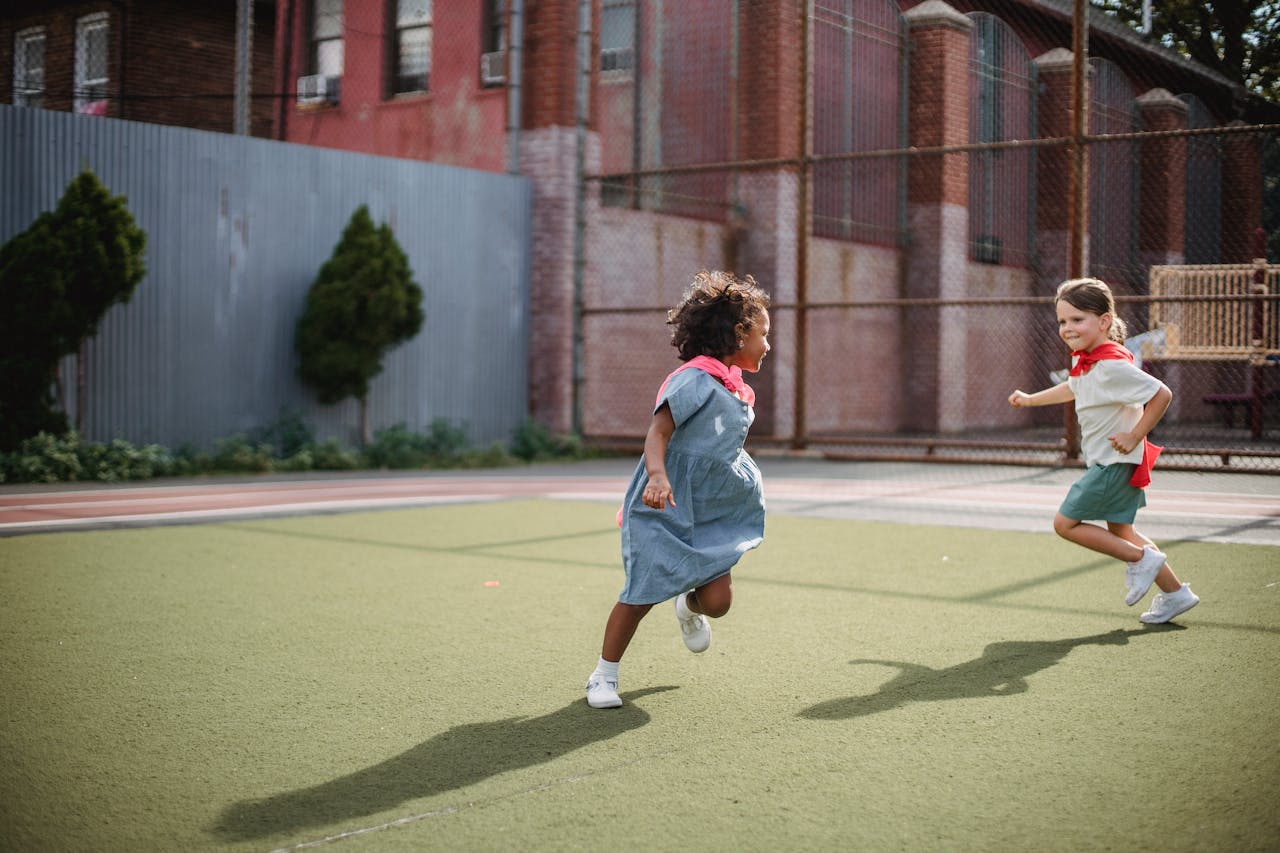
Playground safety starts long before kids climb the first ladder or step on the first rung. It starts with the ground they land on, run across, and roll around on every day. For schools, parks, churches, and HOAs across Ohio, choosing the right surface is one of the most important decisions you can make for child safety and long-term play.
In this article, we will explain why the surface under your play equipment matters so much, how artificial playground turf can help protect kids, and what goes into a safe playground turf installation in Ohio. We will also look at how one well-planned turf system can support play, sports, and community use in the same space.
Safer Surfaces for Ohio Kids All Year Long
Across Ohio, kids are spending more time outside on schoolyards, church playgrounds, neighborhood parks, and shared HOA spaces. With that extra use, old surfacing like loose mulch or worn grass often cannot keep up. It shifts, washes out, freezes, and breaks down right when kids want to play the most.
Artificial playground turf offers another path. A well-designed system can combine:
- Impact protection for falls
- A clean, mud-free surface
- Durability through all four Ohio seasons
When the turf system is planned around local conditions, safety rules, and how the space will be used, it can help keep play areas ready, even when the weather is not perfect. A local installer that understands Ohio soil, drainage, and play patterns can build a surface that fits the community instead of fighting the climate.
Why Playground Safety Starts From the Ground up
Most playground injuries are linked to falls, and many of those falls happen on surfaces that are past their prime. Common problems include:
- Mulch pushed aside under swings and slides
- Compacted soil that gets hard as concrete
- Frozen or muddy areas that turn slick and uneven
Modern playground safety goals focus on more than just the equipment. A safe play area should offer:
- Consistent fall protection across all impact zones
- Slip resistance in wet or cold conditions
- Smooth, stable access for children and caregivers of all abilities
If the base and surface under your play equipment are not planned carefully, even the best new playground can feel risky or be hard to use for kids who use wheelchairs, walkers, or strollers. The surface is not just decoration. It is the part that quietly does the heavy lifting every single day.
How Synthetic Turf Improves Playground Safety
Quality artificial playground turf is more than just green carpet. It is a full system that is built to help protect kids when they fall and to support safer play over time.
Under the turf, there is often a padding layer designed to help the system meet head impact and fall height guidelines around the equipment. When planned correctly, this padding is matched to the heights of slides, climbers, and decks, instead of guessing and hoping for the best.
On the surface, synthetic turf can help with safety by:
- Staying level, with no ruts or bare spots where kids can trip
- Keeping infill in place better than loose mulch or pea gravel
- Giving a predictable, cushioned feel under swings and landing areas
Other safety benefits can include:
- Fewer exposed edges and tripping hazards compared to broken borders
- Better drainage, so water moves through the system and off the play area
- Options for antimicrobial features that support cleaner, fresher play zones
Because the turf is anchored and the base is stable, the surface tends to stay where it is supposed to be, instead of getting kicked away and leaving hard spots under high-use areas.
Weather-Ready Playground Turf for Ohio’s Climate
Ohio’s weather creates a real test for playground surfacing. Freeze, thaw cycles, lake-effect moisture in some regions, and long, muddy springs can all shorten the life of wood chips or natural grass. With those surfaces, you often see:
- Bare dirt and mud patches
- Frozen ruts and bumps
- Puddles that take a long time to dry
A professionally designed synthetic turf system is planned to work with these conditions. That starts with the base and drainage. A solid base and drainage plan help turf handle:
- Heavy rain without large puddles forming on the surface
- Melting snow, and so water moves down and away instead of sitting on top
- Temperature swings, so the play area is more consistent from season to season
Planning a playground turf installation in Ohio before late spring can help schools, parks, and daycares have their new surface ready for peak outdoor play. When the busy season hits, having a weather-ready surface means fewer days when kids are kept inside because the playground is too muddy or slick.
Key Steps in a Safe Playground Turf Installation in Ohio
A safe playground turf project starts with a careful site evaluation. Instead of just laying turf on top of what is already there, a good process looks at:
- Current surface condition and problem areas
- Drainage patterns and low spots
- Fall zones around equipment
- ADA accessibility routes and entry points
From there, a typical installation sequence might include:
- Removing old surfacing and debris
- Grading and building a stable, compacted base
- Adding impact padding in key fall areas
- Laying and seaming the turf so it fits the design
- Adding infill and grooming the surface
- Performing final safety checks and walkthroughs
Working with experienced installers helps make sure the fall-height plan, drainage design, and finishing details all support long-term performance, instead of creating hidden issues that show up after the first big storm or heavy week of use.
Designing Play Spaces for Pets, Sports, and Community Use
Many Ohio playgrounds do more than one job. A schoolyard may need to handle recess, youth sports practice, community gatherings, and sometimes an adjacent pet area. A park might host playground time during the day and family events on weekends.
Synthetic turf systems can be planned with different products and layouts in one project, such as:
- Active game zones with markings for four square or small-sided sports
- Quiet play or reading areas with softer, calmer colors
- Sensory paths and shapes to support different types of play
- Designated pet relief spots near, but not on, the main play surface
When these spaces are designed together, they feel like one connected area instead of a patchwork of mismatched surfaces. Turf that is built to be rugged and low-maintenance also helps schools, municipalities, and organizations plan ahead. With fewer surprise repairs and less daily upkeep, it is easier to keep the space safe, open, and welcoming for everyone who uses it.
Get Started With Your Project Today